Archives for February 2008
High Concept Marketing: Sell it in a Sentence

It’s well known in politics; if you say three things, you say nothing.
We’re all bombarded with ideas all day long. What we need, what we’re looking for, is an idea that jumps out at us. A single understanding so extraordinary that everything else around it suddenly ceases to exist.
So profound in its simplicity and still … still, it has the ability to describe an entire world to us. An idea so loud, so clear, so universally understood that it can’t be mistaken for anything else … ladies and gentlemen, I give you, “jaws on paws”.
? … Dude, you’re losing it. Okay, let me explain …
Millions of Dollars are Made Everyday with Single Sentences
In 1975, a little director made a little movie based on a book. The director’s name was Steven Spielberg and the movie was Jaws (which became the highest grossing movie ever at the time).
In 1983, another book was turned into a movie. It wasn’t an easy idea to pitch if you try to flesh out all the ideas the story involved. But it was successfully pitched, and made, and enjoyed moderate success.
The movie was Cujo; Stephen King’s rabid dog horror flick and it was sold with three simple but powerful words. Jaws on paws.
Million dollar deals are made every day and the best ones are locked in with a single sentence.

High Concept or “Single Sentence Marketing”
What are you selling. In one sentence. You’ve got 5 minutes with a play-maker. You’ve got 5 words to fit on a poster that has to capture people as they stroll by. You’ve got a flyer. A business card. All you’ve got is a freakin’ t-shirt.
And in that tiny space, and space of time, you have to fit the weight of thousands of words and images. You have to fit in an 80 minute Powerpoint presentation. A video. Pie charts, spreadsheets, an interactive workshop, an expert-panel discussion and a live action skit.
High concept marketing makes it easy. Every person on the planet has a wealth of preset understandings of the world and the things in it. All that stuff you need to say … is already in their heads.
You just need the right sentence to bring it out.
What are you selling. In one sentence.
Del.icio.us Digg it! Reddit Yahoo Comments (6)
Negotiation … One on One, or is it a Team Sport?

So you’re sitting there, alone, on one side of the table. And across from you is an army of briefcases. They’re gonna tear you apart, right? Not so fast …
There’s a great advantage to having a negotiating “team”. But there are some huge disadvantages as well.
Building a Negotiating Team
Whether it’s a good-cop, bad-cop “buddy movie” kind of team or it’s a boardroom platoon, there’s just one rule your team has to live by: Nobody says nothin’.
The power of having a good negotiating team is knowledge. Each person on your team is an expert in something. But that knowledge has to be very carefully safeguarded so it can be used strategically. The only time a team member should be engaging the other team at the table is when the team leader specifically asks for their input into the discussion.
There’s 3 reasons for this:
- Rhythm. Your opponent is putting an offer in front of you. You’re quiet, looking kind of stupid and uninterested. You want more. And you want to control the rhythm of the negotiation … and then someone on your team blurts out “Great! Let’s get this down on paper”. Silence is uncomfortable and very effective. And even your own team can crack under its weight.
- Who’s My Dance Partner? If the people across the table start to get different ideas from different people on your team, they’re going to wonder who it is they’re supposed to be dancing with. Who’s calling the shots here? Is this a company with a lot of internal turmoil and ladder-climbing that can be exploited?
- Name That Tune. Is this the salsa or the rhumba? With different ideas flying around, it’s easy to lose sight of what your goals are and how you’re getting to them. You don’t want anyone leaving the negotiation unsure of what it is they’re expected to do next.
Understanding the inherent strength and weakness a team can bring to the table is critical. If it’s your team, you need to make sure it’s a disciplined one. And if it’s theirs, you might want to take it apart piece by piece.
If you don’t have a team that “gets it”, then it’s better to just go in solo.
Personally I like to negotiate one-on-one simply for the entertainment value; playing both good-cop and bad-cop can be a little schizophrenic, but it is amusing …
One minute you’re Starsky. The next, you’re Hutch.
Also check out my previous posts, The Art of Negotiation and Aikido Negotiation Tactics.
Del.icio.us Digg it! Reddit Yahoo Comments (1)
Is Your Company a “Fluffer” for Other Businesses?

fluffer [fluhf-er] n, slang: An off-stage person hired to keep a male porn star in a state of erection.
~ Dictionary.com
Okay, provocative headlines aside, business is a contact sport. It can get rough. No doubt about it … but, are you doing all the work, yet you’re never the star?
Here’s how you know. If you’re saying one of these 3 things, you’re fluffing:
- “Hey, gotta pay the bills and keep the lights on”.
- “Well, it’s just for now. Until we get rolling”.
- “They’re going to bring us some real opportunities down the road”.
Well, you DO have to pay the bills. You CAN cut a client loose later and there REALLY might be bigger opportunities with that customer down the road.
Don’t Get Caught With Your Pants Down
But there are companies that can smell blood in the water. They’ll grind down your margins to nothing. They’ll ask you to put every cent you’ve got into meeting their rigorous standards and requirements. They’ll make huge down-the-road promises.
In the end, you’re doing all the work and they’re making all the big bank. And operating your business on other people’s terms can become a downward spiral where you never get ahead. It can kill your business.
And all those things you’re saying to justify these bad contracts are all the things you started your business to get away from in the first place.
Take the Leap and Be the Star
Doing the jobs you don’t want to do but have to do is a difficult position for any business to get out of. It takes conscious effort. You need an action list and here it is:
- Limit Your Exposure. Cut back on the expenses you’re paying to fulfill your fluffing contracts. Renegotiate cheaper rates with your suppliers. Put more of the customer service burden back on your clients by getting them involved to solve their own problems. Create efficient procedures and automate as much as possible.
- Actively Seek Good Business. Put aside a certain amount of time where you’re not available to your not-so-great customers and use that time to go out and hunt down the kind of customers you really want. Go to trade shows. Schedule as many meetings as you can. And decide right now that you’re only going to take on new contracts that are good for your company with this time. If it’s another fluffing contract, move on to the next meeting without skipping a beat.
It’s a short list, but it’s that simple. Cut your costs and raise your revenues. The key to turning your company into the superstar you want it to be is to go after the superstar jobs.
They might be smaller jobs with smaller clients that pay a higher rate. Or they might be good-sized jobs with large companies that throw cash around because they’re not well organized.
Next thing you know, it’s your movie. And you’re the star.
Del.icio.us Digg it! Reddit Yahoo Comments (3)
Do Something Different Today. It Just Might Save Your Life

Imagine you live in a lush and bountiful valley. Everything you could possibly need is there; family, friends, a generous harvest … even the weather seems to slide into that perfect temperature everyday. What else could you possibly want?
The answer is part of human nature. The answer is “something different”.
Doing the Same Thing Everyday Can Be a Death Sentence
Every day there’s a new study telling us how something is bad for us. And then (usually the same afternoon) there’s another study to tell us the wonderous benefits of that exact same thing.
Confusing, isn’t it? Luckily, there’s a wisdom that’s been passed down through the ages to cut through all the rhetoric and opinion and it goes something like this: All things in moderation.
It’s true; it’s TOO MUCH of anything that can hurt you. That’s why snake charmers ingest small quantities of venom to build up an immunity over time. It’s why even the coffee manufacturers say you shouldn’t drink more than 5 cups a day. It’s why you should limit your exposure to the sun. It’s why you should limit your cellphone usage.
There are innocent dangers all around us. We can’t avoid them all.
But by practicing “all things in moderation” and by doing something different today, you can limit your exposure and hedge your bets.
Everything is perfect in the valley.
But just over the hill, there’s something different.
Del.icio.us Digg it! Reddit Yahoo Comments (2)
The No-Rules Guerilla Marketing of Crackass

My buddy’s brother made an amateur film called Crackass: The Surrey Movie. Just a guy with a handycam and a group of do-anything friends. The movie’s not going to win any big awards, but along with some truly disgusting Jackass-style stunts, there is some real value to it from a documentary perspective.
So how do you sell a flick like this anyway?
Well, here’s one of the things he did. Figuring that his old highschool was a good targeted demographic, he called up the school and announced that he was going to be there at a specific time on a specific day selling his movie. Then he called up the local TV news channels and the local newspapers and told them too.
Oh, yeah … and the other thing he told all of them was this; as a publicity stunt for the event, he was gonna have a stunt guy there set himself on fire.
All the Forces Collide
So the next day the police come knocking on his door. They’ve been hearing some big concerns about his little stunt. He assures them it’s not going to happen (he never had any intention of doing it in the first place), and that’s that.
The day of the event, he shows up (off school property of course) and is greeted by the police, a couple fire trucks, and a cast of media sharks … all of which drew the attention of the kids coming out of the highschool.
He sold a couple dozen DVDs and t-shirts that day. And got some (more) media coverage.
He sold them at pubs, at parties. He even held a screening of the movie at a local pub and sold tickets to the event. Guerilla marketing works. It doesn’t require a budget. It just requires your imagination.
And the guts to do what most people won’t.
Del.icio.us Digg it! Reddit Yahoo Comments
Happy Valentines Day Baby
It’s not that us guys aren’t romantic … we’re just not very good at it.
Happy Valentines Day
Del.icio.us Digg it! Reddit Yahoo Comments
Personal Finance: Thinking Like a Business Person vs. a Consumer

I’m a big fan of Panasonic; all my stuff is Panasonic. Over the years I’ve found that they make great quality electronics and, you either get more features for the same price as other premium brands, or you get the same feature set for a better price.
In December, my TV (which I’ve had for 10 years) finally gave up the ghost. It was time to buy a new one and after some deliberation I finally narrowed it down to 2 choices:
- 42″ Plasma full HD
- 32″ LCD 480i
Right now you’re thinking ‘Woohoo - get the plasma!!’ Which makes a lot of sense because even though I don’t have an HD player right now, everything’s moving towards HD and I might as well plan for the future, right?
Well, that’s just your consumer brain thinking and it can be very convincing.
But I run my personal finances with a business mentality. And one of the worst things you can do in business is plan for the future. The reason is simple; most of the time people spend way too much and go way too big too soon … and noone can tell the future for sure. If you blow your bankroll on startup and preparing for what “might be”, 9 times out of 10 you’ll find yourself in trouble.
It’s far smarter to start small and suffer through the growing pains when you’re building a business. It hurts, it sucks, it’s hard … but it’s the right way to do it.
My Brain Gave Me No Choice But to Make a Business Decision
I’m sure you’ve already guessed that I bought the 32″. And it’s awesome. I’m very happy with it. The price difference was about $600, and the power usage is a whopping 540 watts for the plasma vs 140 watts for the LCD.
The problem isn’t affordability. I can afford better than either of these. And hey, it’s just a TV; it’s not the groundwork for a multi-national business consortium. But I just don’t think like a consumer.
That’s the problem.
Del.icio.us Digg it! Reddit Yahoo Comments (2)
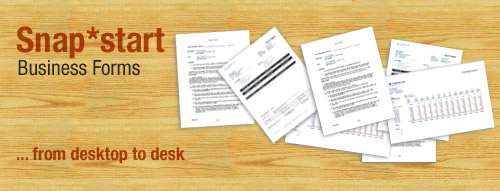
Snap*start: Free Business Forms to Download for Office from Zoomstart

Projecting a professional image is important in business. Especially for small businesses. The last thing you want to do is hand a client an invoice you scribbled out in pencil on a piece of lined paper you ripped out of a 3 ring binder.
If you have a small business, a good set of business forms can run your company without the costs of buying and managing an accounting package. And if you’re on the road frequently and find you can’t access your company system, cranking out an invoice or whatever on the go keeps the business rolling forward.
Snap*start Business Forms
One of the first things I created when I started messing around online was a package of professional business forms. There are lots of free forms around the internet, but most of them are not very high quality. The Snap*start package is. These are real forms; the kind that million dollar businesses use every day and they’ve come in very handy for me.
And best of all, they’re free!
To get Snap*start, just subscribe to my RSS feed or to Email Updates and at the end of each blog post is a link to download your copy.
It’s a zip archive, so after you download it, right click the file and choose “extract all” to pull all the docs out of the archive. The forms work with Microsoft Word and Excel and the freely available OpenOffice.org.
Forms in the Package
Here a list of forms in the package. Some of them are in both Word and Excel, so use whichever program you’re more comfortable with; the Excel forms have certain auto-calculations already set up. There’s a basic instruction sheet and all the forms contain sample information to guide you through them:
- Annual Budget
- Bill of Sale
- Cash Deposit
- Commercial Invoice
- Contact Sales Sheet
- Customer Credit Application
- Demand Promissory Note
- Direct Deposit
- Employee Time Card
- Employment Application and Info-card
- End-of-Shift Register Closeout
- Expense and Mileage Report
- Fax Cover Sheet
- Inventory
- Invoice
- Payroll Advisory
- Payroll Summary
- Petty Cash Journal
- Petty Cash Voucher
- Purchase Order
- Purchase Order Log
- Purchasing Forecast
- Product Supply Agreement
- Product Line Card
- Quotation
- Sales Order
Subscribe to Zoomstart RSS or Email Updates and get your free copy of Snap*start. When you subscribe, you also get access to my free eBook on Branding and whatever other free tools I cook up in the future!
Del.icio.us Digg it! Reddit Yahoo Comments (6)
American Express Plum Card: The Credit Card Wars Heat Up

There was a lot of speculation on how well the Mastercard IPO would do in 2006. The stock’s done well. Very well. And investors are waiting anxiously for the coming Visa IPO which has got fortune-maker written all over it.
These public offerings are raising the stakes in the credit card arena significantly and the offerings we’ll see from the various credit card issuers as they duke it out is going to get a lot more competitive.
Understanding Trade Terms in General
Most businesses have credit accounts with other businesses (their suppliers). When it come to trade terms on business-to-business transactions, the most common set of terms is net 30 days; you buy something and you have 30 days from the invoice date to pay for it.
But there’s another common term that’s used for B2B credit accounts called 2% 10 days. What this means is that if you pay within 10 days of the invoice date, you get a 2% rebate on the invoice amount. 2 percent 10 days is a set of terms that’s usually forced on small companies by large retailers and distributors because it’s a good deal for these cash-rich buyers.
A Closer Look at 2% 10 Days
Large retailers (and cash-and-carry distributors) have a steady inflow of cash. So what do they do with it? Most businesses keep their liquid cash in the bank. At say, 4% annual interest, it’s not a great investment. But it’s liquid and available.
If you look at what that cash would earn by sitting in the bank for 20 days, it’s (4% / 365 * 20) = 0.22%. So in 20 days you could make $0.22 on $100. If that’s money for your Ferrari fund, it’s gonna take a while.
But if you’ve got a 2%-10 deal with your suppliers then effectively you’re paying them 20 days sooner than net 30 in exchange for 2% off the invoice amount. Which equals $2.00 on $100 or almost 10 times what you can get by leaving that money in the bank and paying your bills in 30 days. Sa-weet!
Generally it’s better to defer your payables longer. But if you’ve got a steady inflow of cash, then you might as well leverage it to earn more money. Small suppliers don’t have much choice but to accept these terms, and if they’re cash starved it can be helpful (although pricey).
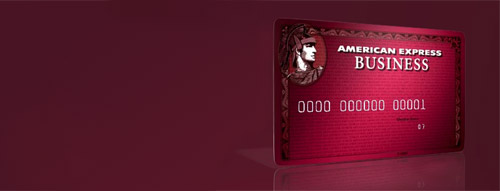
The American Express Plum Card
So here’s what American Express is offering … the Plum Card gives you a 2% rebate if you have a monthly balance over $5000 and you pay within 10 days. Effectively, they’re putting these great trade terms into the hands of small businesses to use their card.
If your monthly balance is less than $5000, then you get a rebate of 1% for paying early. And if you need to defer your payables, you can pay 10% of your balance and defer the rest for 2 months interest free.
It’s a very flexible card and a pretty good deal for small to medium businesses or online businesses that use a credit card for a significant amount of purchasing.
So … Visa … Mastercard … care to up the ante guys?
Del.icio.us Digg it! Reddit Yahoo Comments (4)
Leadership Hats: The Sombrero

I know, I know … you’re a machine. And I know if they could bottle the drive and passion you put into every second of the day, a crate of the stuff would be worth a king’s ransom.
But even machines need an oil change and a tune-up once in a while.
A Very Important Leadership Hat
Out of all the different hats that leaders wear, the sombrero (or as I like to call it, the siesta-time hat) earns the least respect. But it’s one of the more important hats you can wear. And probably not for the reasons you’re thinking.
Yes, the sombrero combats fatigue and burn-out and helps you bring some balance to the mad dash of whatever you’re pursuing. It also does two other very important things:
- It gives you room for improvement. With anything you’re working on there are always a hundred little pieces to the puzzle. And when everything is moving at light speed and you’ve got to get all those pieces put together right now, you don’t really have time to make sure they’re the best pieces. A little siesta time removes you from the daily grind and lets you put some thought into each of them. So instead of just focusing on getting them done, you can work on better ways to get them done.
- It gives you a look at new horizons. Just as important as looking at all the pieces of the puzzle is seeing the big picture. You need the big picture; that view from 50,000 feet. It’s the only way to see if you’ve got a hundred miles of pristine train track in front of you or a washed out bridge and a date with gravity down the line. Stepping back and looking at different things from different perspectives also gives you new insights into new directions. If you can completely separate yourself from the tasks at hand, you can find all sorts of new and exciting opportunities. Opportunities that are not found within the confines of the pieces or the big picture you’re working on.
The next time something doesn’t feel like it’s on track, or good enough, or bringing in enough new opportunities … lead the way. Put on your sombrero and step away from it for a while.
And don’t forget the tequila.